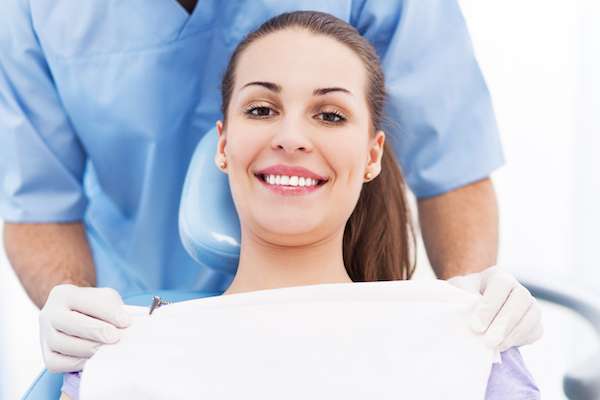
While examining the inside of the mouth is already a typical part of a regular dental check-up, for many people it is also worth scheduling an appointment for an oral cancer screening. The American Cancer Society predicts that more than 53,000 people will be diagnosed with oropharyngeal or oral cavity cancer in 2020, and together these two types of cancers are expected to cause more than 10,000 deaths.
Risk factors
If you are wondering if it is necessary for you to get a cancer screening, it can be helpful to know some of the risk factors. The most common one is smoking, with an even greater likelihood of cancer if that is combined with a habit of heavy alcohol use. It is thought that these two factors may be what account for oral cancer being twice as common in men. Sun exposure is another indicator of concern for lip cancer specifically. Presence of the human papillomavirus (HPV) also has a rising correlation with cancer of the mouth.
Screening process
An oral cancer screening appointment involves a closer examination than is typical for a routine dental cleaning. Here is what can be expected:
A more detailed intake
The dental or medical professional should ask a number of questions, and it is important to be extremely honest when answering. It is common to dismiss certain symptoms as being no big deal or just one's imagination. Even if it seems like it is nothing, be sure to mention whatever comes to mind during the intake. These are some of the more common symptoms that may be asked about:
- Ongoing hoarseness
- Difficulty swallowing
- Earaches, especially one-sided ones
- Feeling small nodules on the side of the neck
- Changes in the voice
Visual inspection
This type of screening entails far more than just looking inside the mouth. The screener also looks at the lips, face and neck to check for any indications of issues that need further investigation.
Physical examination
The screener next conducts a physical examination, using gloved hands to palpate, or touch, the different areas of the mouth, face and neck. This includes checking inside the mouth, underneath the tongue and inside the cheeks and lips, as well as palpating the body and sides of the tongue. The neck and face are also physically examined. At the same time, the professional continues the visual observation of all these areas.
Next steps
Depending on the results of the oral cancer screening, patients may be advised about suggested next steps. These may entail further examinations or diagnostic tests if any abnormalities were noticed.
Check out what others are saying about our dental services on Yelp: Oral Cancer Screenings in Gainesville, VA.
Conclusion
As with any type of cancer, the earlier that oral cancer is caught, the better the chance of a positive outcome. Oftentimes, there is no pain present in the early stages of this condition. Rather, the changes are often subtle, so it can take a trained professional who has screened hundreds of patients to be able to catch small warning signs.
Request an appointment or call Prince William Dental at 703-662-8287 for an appointment in our Gainesville office.
Recent Posts
Knowing whether to visit an emergency dentist or an emergency room can make a significant difference in receiving the right care. Dental emergencies can be painful and distressing, but not all require a hospital visit. An emergency dentist is often the best option for immediate relief and specialized treatment. However, understanding where to go in…
Endodontics often relieves intense tooth pain by treating infection or inflammation deep inside a tooth. When care stays gentle and methodical, root canal therapy can feel far more manageable than its reputation suggests. A general dentist who prioritizes comfort, clear communication, and careful technique can help the entire process move smoothly from diagnosis to recovery.…
An emergency dentist can provide fast relief from various dental problems. However, proper aftercare is necessary for a smooth recovery. Taking the right steps can help manage pain, prevent complications, and speed up healing. By following a few tips, you can protect your oral health and feel better faster.Emergency dentists are often general dentists offering…